Shoulder Pain Treatment Options
Conservative treatment
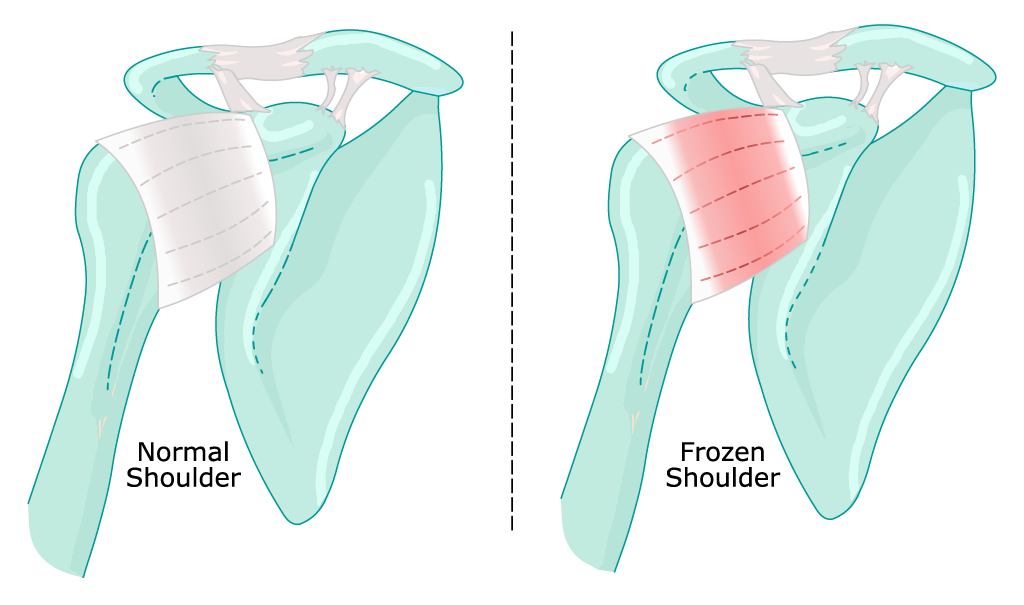
When first diagnosed with frozen shoulder, doctors will recommend a series of “conservative” treatments such as anti-inflammatory medications (over-the-counter and/or prescription), as well as pain injections and physical therapy. While these can help reduce inflammation and improve range of motion, full recovery can take up to two years, if it recovers at all.
Surgery
If conservative treatments have not worked, arthroscopic surgery may be an option. Surgery carries increased risks, and requires a long recovery period, during which intensive physical therapy will be required. In addition, up to 30% of those who have this surgery will continue to experience persistent pain or require additional surgery in the future.
Frozen shoulder embolization (FSE)
A new option for treating frozen shoulder is available from the doctors at Carolina Endovascular. Frozen shoulder embolization is a minimally invasive procedure to embolize or “block” the flow of blood through abnormal blood vessels within the shoulder joint. This has been shown to decrease inflammation and pain and restore range of motion. Furthermore, it does not impact your ability to have shoulder surgery in the future should you need it.
Please visit our FSE section to learn more about this exciting option »