Treatment Options
Conservative treatment
The first line of treatment for hemorrhoids includes topical creams or suppositories, witch hazel pads, sitz baths and over-the-counter medications (if you are experiencing pain). Stool softeners may also be used to make bowel movements less uncomfortable. If symptoms persist despite these conservative treatments, further treatment may be needed.
Surgery
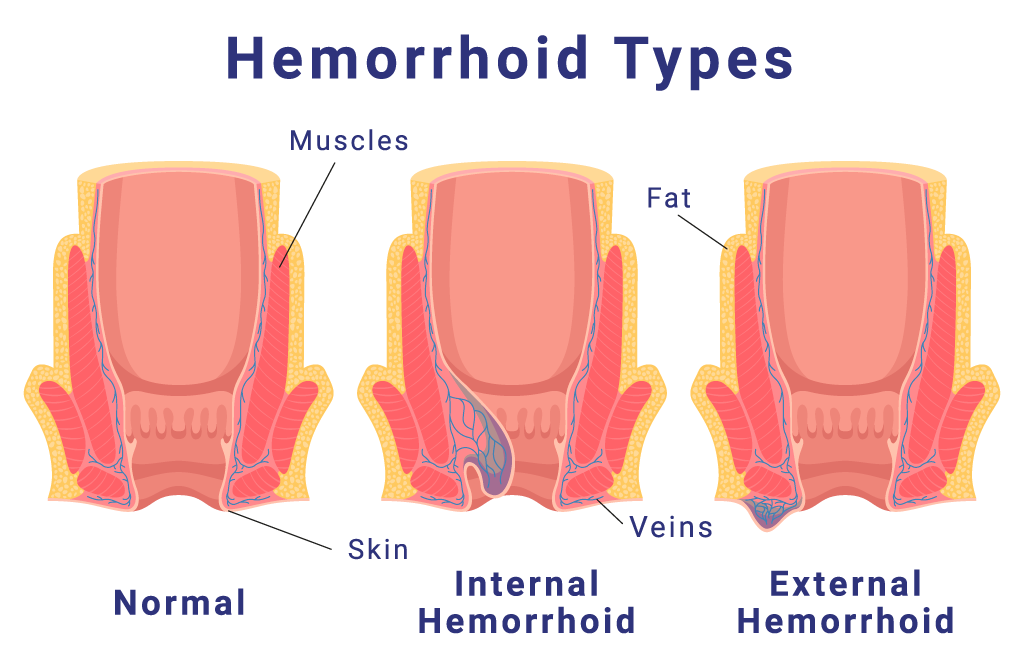
For more severe cases, a surgical treatment called hemorrhoidectomy is sometimes recommended. This approach is most effective for large external or prolapsed internal hemorrhoids. However, there is a long and painful recovery which can be made even more difficult by the need to have daily bowel movements.
Rubber band ligation
This less invasive approach uses a small band to cut the blood supply to the hemorrhoid. As a result, the hemorrhoid shrinks and falls off. However, this can also require a lengthy recovery, and it is not appropriate for those who are on anticoagulant medication, those at increased risk for infection and those with insufficient tissue to pull into the banding device.
Hemorrhoidal artery embolization (HAE)
Hemorrhoidal artery embolization (HAE) is a minimally invasive, image-guided procedure used to treat symptomatic hemorrhoids by reducing their blood supply. Unlike surgical hemorrhoidectomy, HAE is performed under local anesthesia, requires no incisions in the anal region, and patients experience shorter recovery times and a much less painful recovery.
Please visit our HAE section to learn more about this option.