
Knee Osteoarthritis and Knee Pain

Osteoarthritis is a condition experienced by many Americans as they age, resulting in inflammation, pain and limited joint mobility. It is a progressive disease, meaning that cartilage within the joint will continue to degenerate and the pain will worsen over time.

It is now known that chronic inflammation causes abnormal blood vessels to grow within the joint. This condition, called synovitis, actually accelerates the loss of knee cartilage. Without cartilage to keep the bones of the knee joint from rubbing together, the resulting bone-on-bone friction can cause excruciating pain.

The symptoms of knee osteoarthritis can include:

  • Dull or sharp pain (that worsens with activity)
  • Stiffness (especially in the morning or after inactivity)
  • Swelling
  • Warmth or tenderness
  • A grinding or “crackling” sensation
  • Decreased flexibility
  • Bone spurs

Left untreated, osteoarthritis will become more painful and can limit activity and daily function.

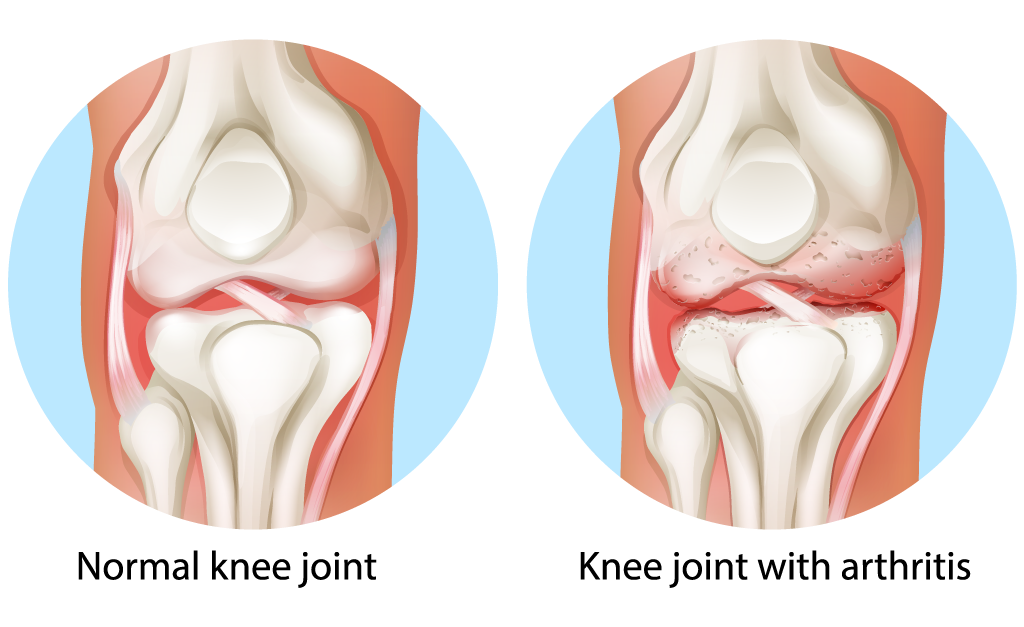
Knee Osteoarthritis/Knee Pain

What causes knee osteoarthritis (knee OA)?

The most significant risk factor for knee OA is your age. It is most common in adults over 50. Being overweight, experiencing repeated joint stress, having weak muscles or having experienced a previous injury can also contribute. Women are more likely to develop knee OA.

Treatment Options

Conservative treatment

When the pain is mild to moderate, physicians often prescribe what is known as “conservative” treatment. This includes pain medications, physical therapy, joint injections or corticosteroid injections to manage the pain. Many patients are advised to continue this approach until the knee cartilage fully degenerates, when they become candidates for total knee replacement surgery.

Total Knee Arthroscopy Surgery

This surgery, which is less invasive than total knee replacement surgery, is designed to fully diagnose the condition, remove damaged tissue, repair torn ligaments and remove any loose bone fragments. It can help reduce pain, but having this procedure is associated with worsened knee stability, accelerated knee osteoarthritis and an increased risk of requiring total knee replacement surgery within 5 years.

Total Knee Replacement Surgery

Considered the “gold standard” for severe knee OA, this open surgical approach replaces the knee joint with synthetic components. However, this surgery requires a significant recovery period and physical therapy to regain full functionality. Additionally, many patients who qualify for this surgery refuse to have it.

Genicular artery embolization (GAE)

GAE is a new and minimally invasive procedure to treat knee osteoarthritis as well as persistent knee pain after knee replacement. Unlike other treatments, it targets the abnormal blood vessels that develop within the knee. It has been shown to be effective at reducing pain and inflammation without surgery and without the lengthy recovery.

Please visit our GAE section to learn more about this option.