What minimally invasive treatments are available for vascular disease?
At Carolina Endovascular, we perform several different endovascular treatments to treat a full range of vascular conditions. Endovascular literally means “inside a blood vessel” which is where the treatment is performed… using tiny catheters, miniature instruments and a specially trained doctor known as an interventional radiologist who uses imaging to see inside the vessel to perform the procedure.
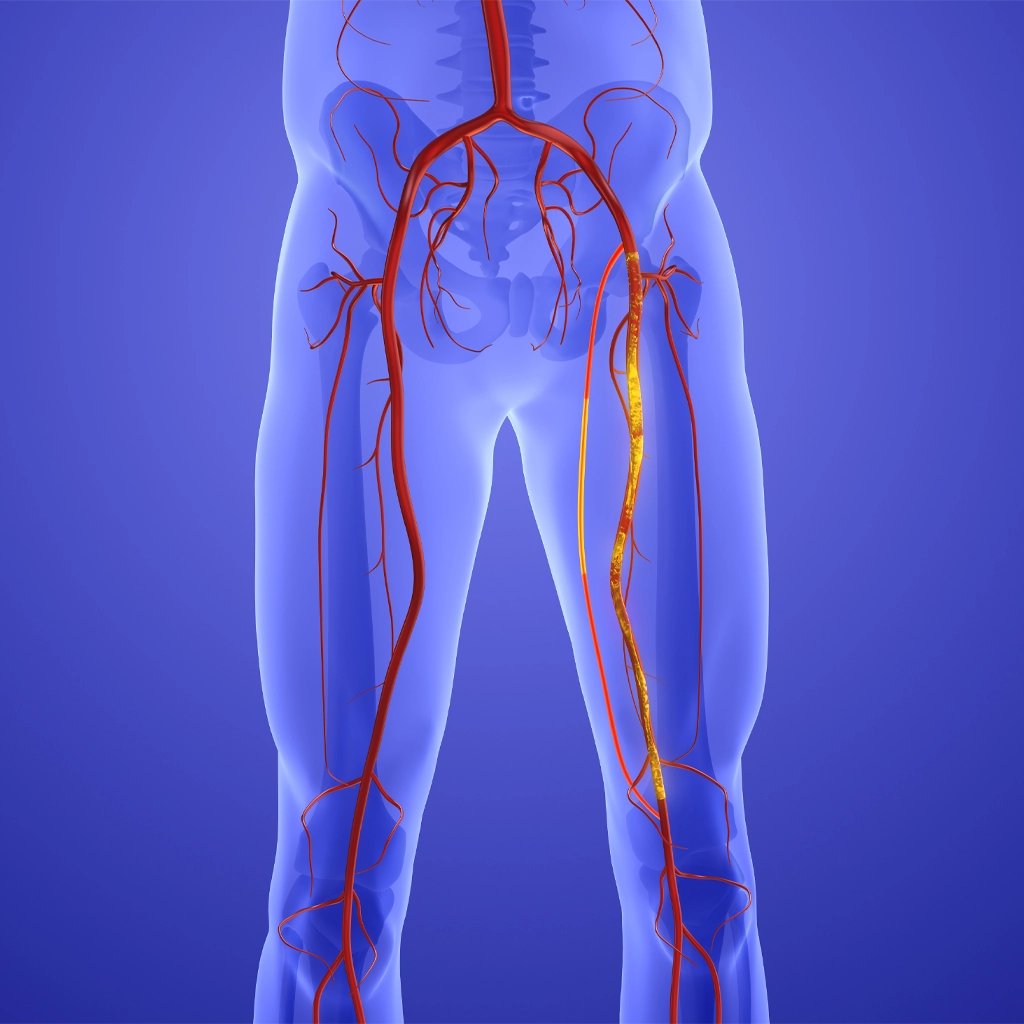
For PAD, angioplasty is a minimally invasive treatment to open a narrowed artery that is preventing blood from flowing to the extremities. The doctor advances a catheter with a special balloon into the narrowed artery. The balloon is then inflated to open the artery. In some cases, a tiny metal scaffold—known as a stent—may need to be placed within the artery to keep it open. An alternative treatment, called atherectomy, uses a tiny burring device to cut away plaque from the artery wall and safely remove it from the body.
For DVT, catheter-directed thrombolysis is a safe and effective alternative to surgery. If anticoagulation medication hasn’t effectively dissolved the clot, our doctor uses imaging to guide a catheter into the deep vein and releases a special clot-busting medication directly into the clot to dissolve it.
For varicose veins, radiofrequency (RFA) ablation is a technique used by our doctors to seal off the diseased vein. This causes it to shrink, and blood is naturally re-routed through other, healthy blood vessels. Over time, the varicose vein shrinks and is absorbed by the body.