Enlarged prostate? What every man over 50 needs to know about BPH this Men’s Health Month
Medically reviewed by Dylan Suttle, MD
Did you know that June is Men’s Health Month?
Did you also know that one of the most prevalent health issues for a man as he ages is an enlarged prostate (BPH)?
Studies suggest that more than half of men in their 60s and up to 90% of men in their 70s and 80s have some degree of an enlarged prostate.1 If you’re in that age bracket, don’t feel alone- some of America’s most beloved actors are getting older and may very well be experiencing symptoms of enlarged prostate too, such as George Clooney, Brad Pitt, Robert Downey Jr., and Mark Wahlberg.5
So, what is BPH?
BPH stands for benign prostatic hyperplasia, which is just a clinical way of saying enlarged prostate. “Benign” is the keyword here. BPH isn’t cancer, and it won’t turn into cancer. But that doesn’t mean it’s something to brush off.
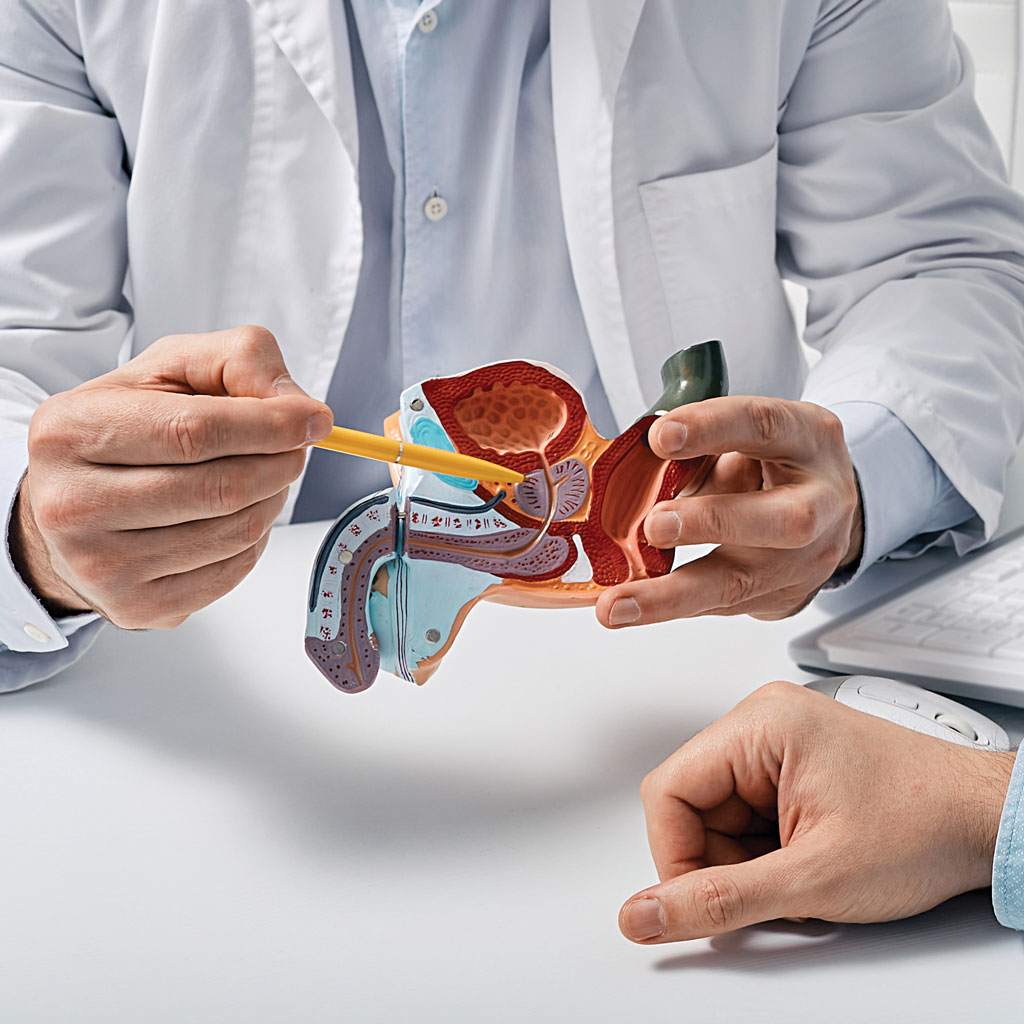
The prostate gland sits just below the bladder and surrounds the urethra (the tube that carries urine out of the body). When it enlarges, it can compress the urethra, making urination difficult, uncomfortable, or just plain inconvenient. And here’s the thing: the prostate never really stops growing. It goes through two main growth spurts: one during puberty and another around age 25 that continues slowly for the rest of a man’s life.2
What are the symptoms of BPH?
BPH symptoms can sneak up gradually, which is part of why men often chalk them up to “just getting older.” But there’s a difference between normal aging and something that needs attention.
Here are the BPH symptoms to watch for:
- Frequent urination, especially at night
- A weak or slow urine stream
- Difficulty starting urination
- Feeling like your bladder never fully empties
- Dribbling at the end of urination
- A sudden, urgent need to urinate that’s hard to control
If any of these sound familiar, it’s worth having a conversation with your doctor. Left untreated, BPH can lead to more serious complications like urinary tract infections, bladder damage, or kidney problems.3
Why Men’s Health Month is the right time to take it seriously
Here’s an uncomfortable truth: men are notoriously bad at going to the doctor. Research consistently shows that men are less likely than women to seek preventive care, and many wait until symptoms become severe before getting checked out.4
Men’s Health Month serves as a reminder that taking care of your health should be a priority! And BPH is the perfect example of a condition where early attention makes a real difference in quality of life. Think about it this way: if a leaky faucet were disrupting your sleep every night, you’d fix it. Your bladder deserves the same consideration.
What are your BPH treatment options?
The good news is that BPH is very treatable, and there are more options than ever (including minimally invasive ones that don’t require major surgery or a long recovery!).
Lifestyle changes can help mild cases. Cutting back on caffeine and alcohol, timing fluid intake, and doing bladder training exercises can ease symptoms for some men.
Medications like alpha-blockers (which relax the muscles around the prostate) or 5-alpha reductase inhibitors (which can actually shrink the prostate over time) are commonly prescribed and work well for many patients.
Minimally invasive procedures have become increasingly popular because they offer relief without the risks and downtime of traditional surgery. One option worth knowing about is Prostate Artery Embolization (PAE) — a procedure performed by interventional radiologists that reduces prostate size by limiting blood flow to the gland. It’s done through a tiny incision, typically in an outpatient setting, with minimal recovery time.
Surgical options like TURP (transurethral resection of the prostate) remain effective for more severe cases and are considered the go-to for significant BPH.
The right BPH treatment depends on the severity of your symptoms, your overall health, and your personal preferences. That’s exactly the kind of conversation you should have with a specialist.
Don’t wait until it gets worse
BPH doesn’t fix itself, and symptoms rarely improve on their own without treatment. The good news is that relief is available, and you don’t have to just white-knuckle through disrupted sleep and uncomfortable bathroom experiences.
This Men’s Health Month, commit to seeking relief. If you’ve been putting off that conversation with a doctor, consider this your nudge.
Want to learn more about minimally invasive treatment?
At Carolina Endovascular, our team specializes in minimally invasive treatments for BPH, including Prostate Artery Embolization (PAE). We understand that talking about prostate health can feel awkward, but getting the right care shouldn’t be.
Schedule a consultation with Carolina Endovascular today and find out if a minimally invasive approach is right for you. Your quality of life is worth it.
Sources:
- Roehrborn CG. Benign Prostatic Hyperplasia: An Overview. Reviews in Urology. 2005;7(Suppl 9):S3–S14.
- National Institute of Diabetes and Digestive and Kidney Diseases. Prostate Enlargement (Benign Prostatic Hyperplasia). U.S. Department of Health and Human Services.
- Mayo Clinic Staff. Benign Prostatic Hyperplasia (BPH). Mayo Clinic. mayoclinic.org.
- Springer KW, Mouzon DM. “Macho Men” and Preventive Health Care: Implications for Older Men in Different Social Classes. Journal of Health and Social Behavior. 2011;52(2):212–227.
- VIP International. Spotlight on Health: 11 Celebrities Who Discovered the Magic of Minimally Invasive Procedures.