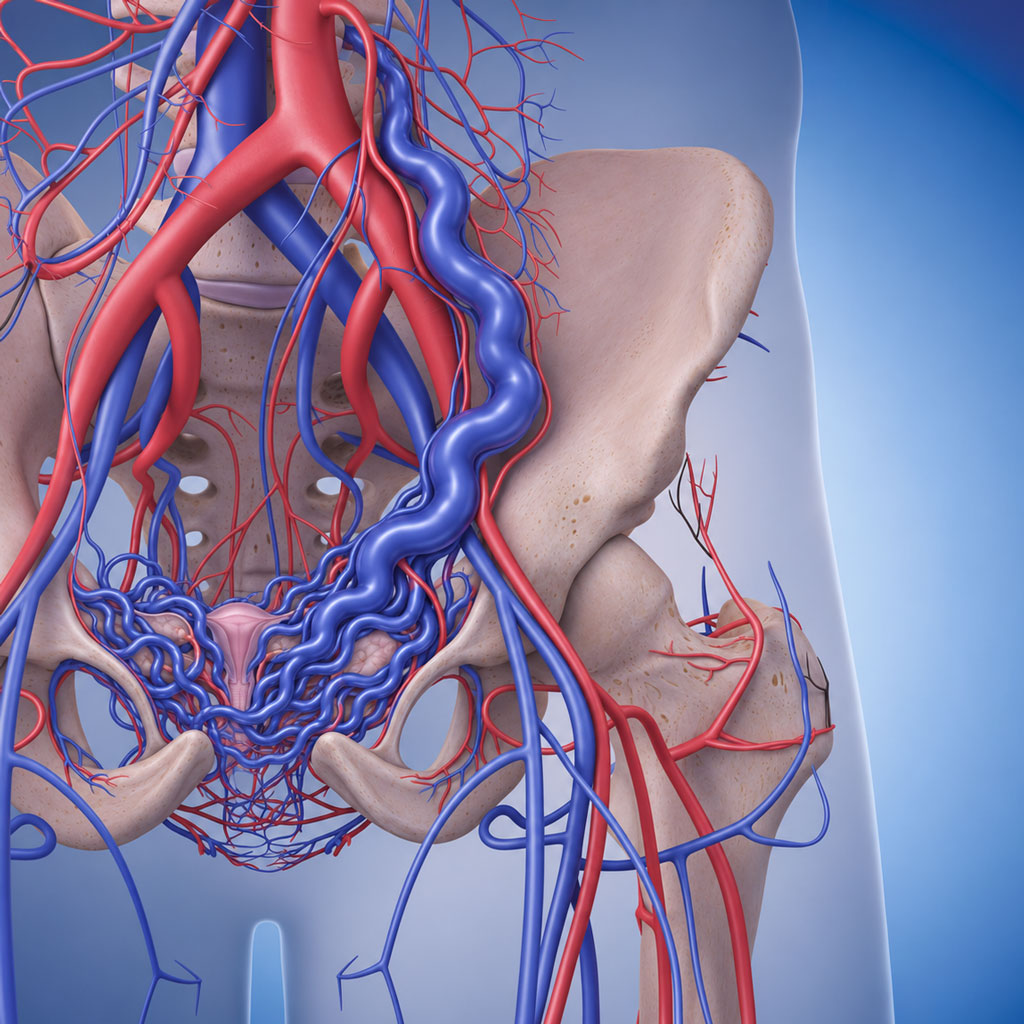
Pelvic Venous Disease

Pelvic venous disease (PVD), also called pelvic congestion syndrome (PCS), is a condition in which veins within the pelvis become enlarged. Valves that prevent blood from flowing backward (away from the heart) become faulty, allowing blood to pool in the veins. This is very similar to what causes varicose 3.veins in the legs.

The enlarged veins can cause chronic pelvic pain and discomfort. Symptoms can include:

  • A dull aching or heavy feeling in the lower abdomen/pelvis
  • Pain that worsens after standing or sitting for long periods of time, or later in the day
  • Pain during or after sex
  • Visible varicose veins around the vulva, upper thighs or buttocks
  • PVD mostly affects women of childbearing age, particularly after one or more pregnancies.

woman with Pelvic Venous Disease
Pelvic Venous Disease Illustration

What causes pelvic venous disease?

Venous insufficiency is the primary cause of PVD, which is characterized by faulty or weakened vein valves. Factors that contribute to the condition’s causes include pregnancy, hormones, genetic tendency and in rare cases, a compressed or narrowed vein. Examples of the latter include May-Thurner syndrome or nutcracker syndrome.

It is important to note that the symptoms of PVD are very similar to other pelvic conditions experienced by women, including endometriosis, ovarian cysts and uterine fibroids. As a result, it can be difficult to diagnose. Imaging, such as pelvic ultrasound, CT, MRI or venography can help to correctly diagnose this condition.

Treatment options

There are several treatment options for women experiencing the symptoms of PVD:

Conservative treatment

Non-steroidal anti-inflammatory medications (NSAIDS) such as Advil, Tylenol and others may be recommended, as well as an increase in physical activity and avoidance of prolonged standing can help control symptoms. Additionally, treating the pelvic floor muscle may also have pain-relieving effects.

Hormone treatment

Medications that suppress ovarian hormonal activity is sometimes used to relive pain. These may contain progestins or other medications to suppress estrogen production. This approach isn’t right for all patients, and there can be side effects.

Surgical options

Surgical removal of problematic veins or hysterectomy with removal of the ovaries have been used in some circumstances to treat PVD. However, because less-invasive treatments are available, surgery is generally not the first choice for treating PVD.

Ovarian vein embolization/Pelvic vein embolization

This is the primary minimally invasive treatment recommended for PVD. During this treatment, an interventional radiologist embolizes or “blocks” the flow of blood into a faulty vein. Blood is naturally re-routed through other, healthy veins. The faulty veins shrink and symptoms are alleviated.

To learn more about ovarian vein embolization, please visit our PVD treatment page or contact us today to schedule a consultation.